
LIGHTHUNTER SECURITY CAMERAS
What is Lighthunter technology?
In modern video surveillance and electronic security, capturing clear, detailed images at night or in extremely low-light environments. Has long been a significant challenge. Conventional cameras often revert to infrared (IR) mode as ambient light decreases. It results in black-and-white footage that fails to reveal crucial details like the color of a suspect’s clothing or the precise shade of a vehicle but Lighthunter security cameras is different.
To address this issue, Uniview (UNV) developed LightHunter technology. An advanced innovation designed to capture high-definition. Full-color images even in ultra-low-light conditions. This breakthrough is transforming nighttime surveillance for residential, commercial, and industrial properties. It enables the capture of critical visual details that traditional cameras miss.
What's the difference between Lighthunter technology and traditional cameras services?
Lighthunter security cameras technology integrates advanced optical components, cutting-edge image sensors, and AI-powered digital signal processing. Unlike conventional infrared cameras, LightHunter maximizes minimal ambient light to produce sharp. Low-noise video with accurate, vivid color—even in near-total darkness.
This technology relies on three fundamental pillars:
Super F1.6 Large Aperture Lenses:
- With much wider focal apertures than standard lenses, they let up to twice as much light reach the internal sensor.
Back-Illuminated CMOS Sensors (BSI):
- Engineered to capture the maximum possible photons in dark settings, significantly improving light sensitivity.
U-ISP Processor with Noise Reduction Algorithms:
- UNV’s patented digital signal processing eliminates digital noise (grain) and reduces motion blur, keeping fast-moving subjects and people sharp.
Lighthunter challenges
Unlike conventional infrared (IR) fill light technology, which typically produces black-and-white images in low-light conditions. LightHunter technology captures clear, high-resolution images with enhanced color details. This capability provides valuable information for identifying vehicles and suspects. It includes license plate numbers, vehicle colors and models, as well as facial features, hair color, height, and clothing colors. These details can help law enforcement and security professionals investigate incidents more effectively.
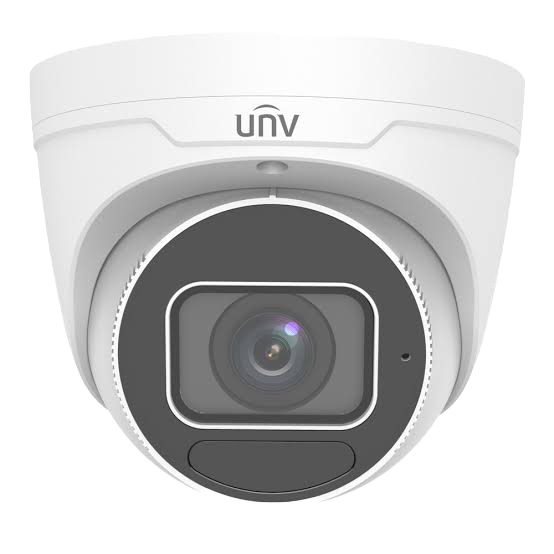
Core features and benefits
High-Clarity Full-Color Night Vision
The standout advantage of the UNV LightHunter series is its ability to deliver crisp, full-color images even when illumination falls to just 0.0005 Lux. With only minimal ambient light—such as from a distant streetlamp or moonlight—the camera effectively captures crucial details like clothing colors, vehicle license plates, and facial characteristics.
Reduced False Alarms with SIP (Smart Intrusion Prevention)
Most UNV Security cameras feature advanced AI-powered video analytics. The Smart Intrusion Prevention (SIP) function accurately distinguishes between people, vehicles, and inconsequential objects such as rain, moving foliage, small animals, or shifting shadows. This significantly reduces false alarms and optimizes storage by ensuring only relevant events are recorded.

True Wide Dynamic Range (Optical WDR)
In environments with intense bright spots and deep shadows side by side (such as parking garage entrances or vehicle headlights in the dark), optical WDR of up to 130 dB balances image exposure. This prevents bright areas from washing out or shadow areas from becoming completely dark.
Rugged Build for Outdoor Environments
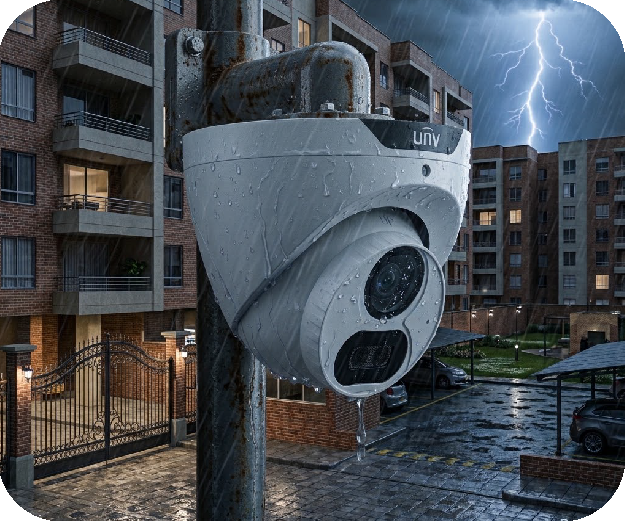
UNV security cameras are built to withstand severe weather and physical abuse. They feature IP67 weatherproof ratings against dust and water ingress. Alongside IK10 vandal-resistant certifications to protect against physical impacts and tampering.
Dome Cameras
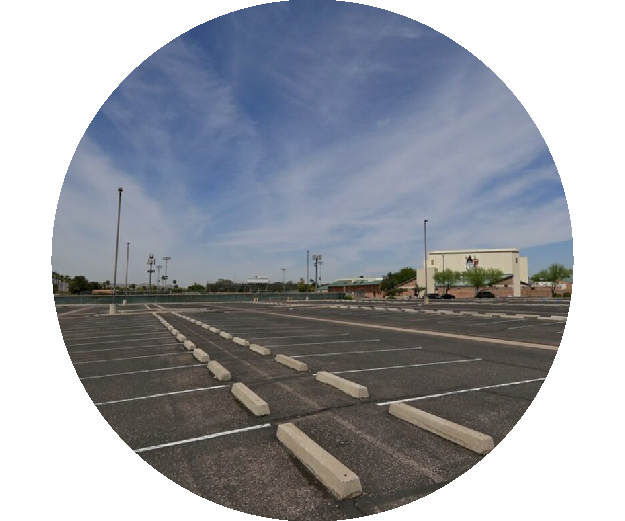
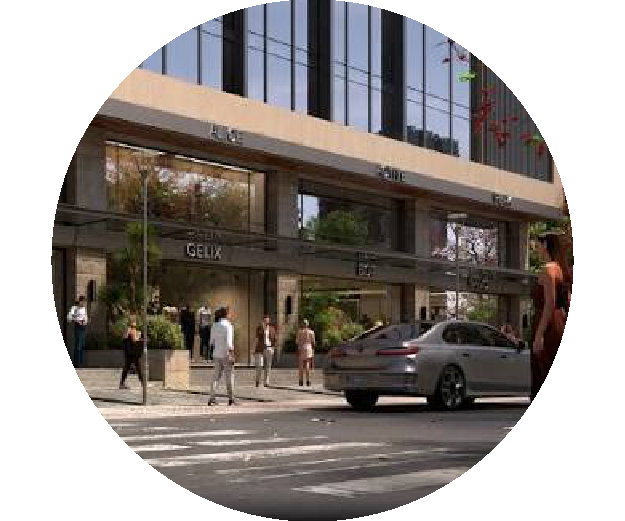
Ideal for monitoring corporate entrances, lobbies, and parking facilities. These cameras feature a compact, IK10-rated vandal-resistant housing that deters tampering and integrates discreetly into architectural spaces.
Bullet Cameras
Optimized for securing outdoor perimeters, extended hallways, and building facades. These models deliver resolutions from 2MP to 4K Ultra HD, use advanced smart IR technology for balanced nighttime illumination, and include high-fidelity integrated microphones for audio capture.
PTZ Cameras with Optical Zoom
These models pair outstanding low-light imaging with full pan, tilt, and optical zoom, offering zoom ranges from 4x to 30x. They are engineered for automated coverage of vast areas—including warehouses, industrial complexes, and wide perimeters—where flexible, responsive viewing angles are essential.
Aplications
Successful access control device installation requires meticulous technical execution, durable physical components, and uncompromising regulatory compliance. The initial phase is precise electrical management—ensuring systems have dedicated, filtered, and regulated power supplies with battery backups, correctly sized wire gauges to prevent voltage drop, and clear separation between high-current lock power and sensitive communication lines to minimize electrical noise. Always fit transient protection devices, such as flyback diodes or MOVs, across inductive locking hardware to protect against damaging voltage spikes.
Physical mounting must account for environmental factors by using corrosion-resistant hardware like marine-grade 316 stainless steel or anodized aluminum, and ensuring all outdoor equipment meets at least IP65/IP66 ingress protection. Card readers and keypads should comply with accessibility guidelines (e.g., ADA-compliant mounting heights of 34–48 inches) and incorporate tamper switches for enhanced security.
Ensure your security
Life safety and fire codes require that fail-safe magnetic locks on primary emergency exits are directly integrated with the fire alarm panel, ensuring they unlock automatically during alarms. Request-to-exit (REX) devices must be provided for unobstructed egress at all times.
From a networking perspective, route all cabling in protective conduit, segment access control systems on dedicated VLANs, and select secure, bi-directional protocols like OSDP over older Wiegand wiring. Thorough commissioning—including testing every entry, exit, alarm, and fire drop scenario—plus detailed as-built documentation, ensures long-term reliability and simplifies future maintenance.